Most people build features.
An AI that builds a correctable model of how you think. An independent blockchain with its own consensus. A trading institution that issues verifiable credentials. Seven products — each one designed, built and shipped end to end.
Not a chatbot. A second mind.
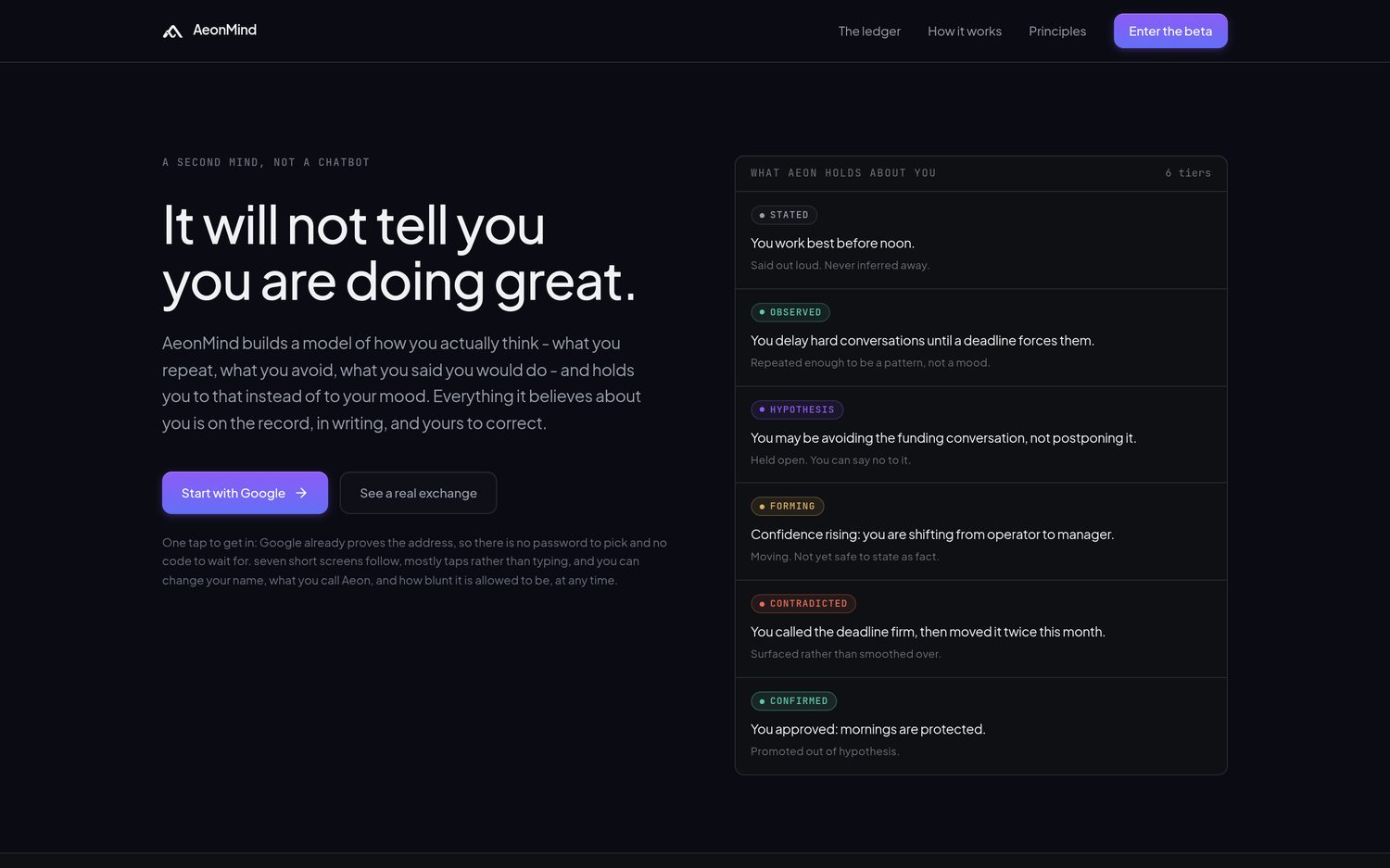
AeonMind is the operating system; Aeon is the AI inside it. It remembers across sessions, learns how you think, and builds an AI Self — a living model of you that you can read, argue with and correct. Memory is organised by how it was learned, so every inferred belief is a row you can confirm or reject.

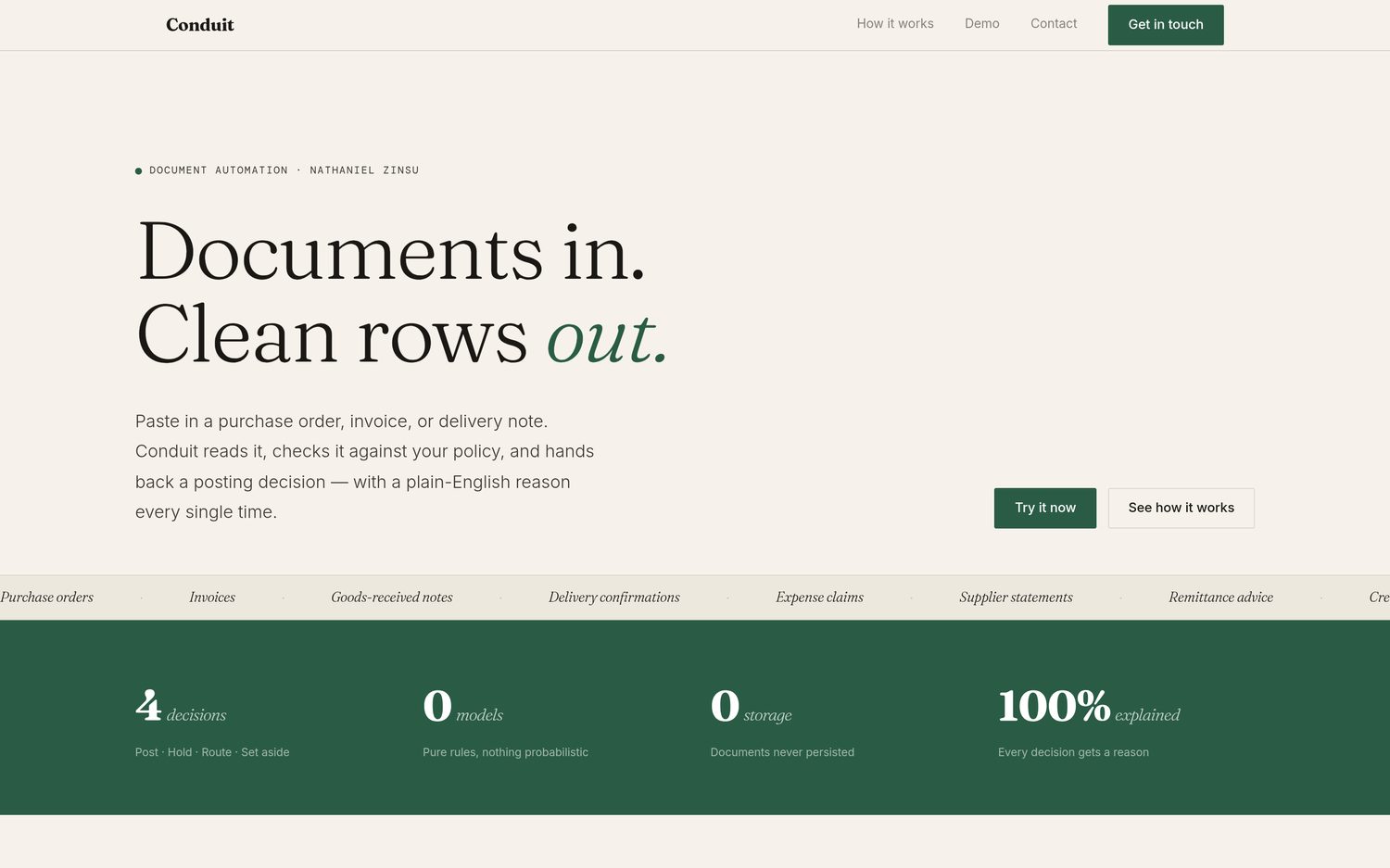
Paste a document. Get a clean row.
Emails with attachments arrive. Conduit classifies them, extracts the fields each document type needs, validates them against the same gates a system of record would run, and writes clean rows into your ERP, accounting and WMS. One screen, no sign-in — a stranger on a phone gets a result in under a minute.

An independent chain, written from first principles.
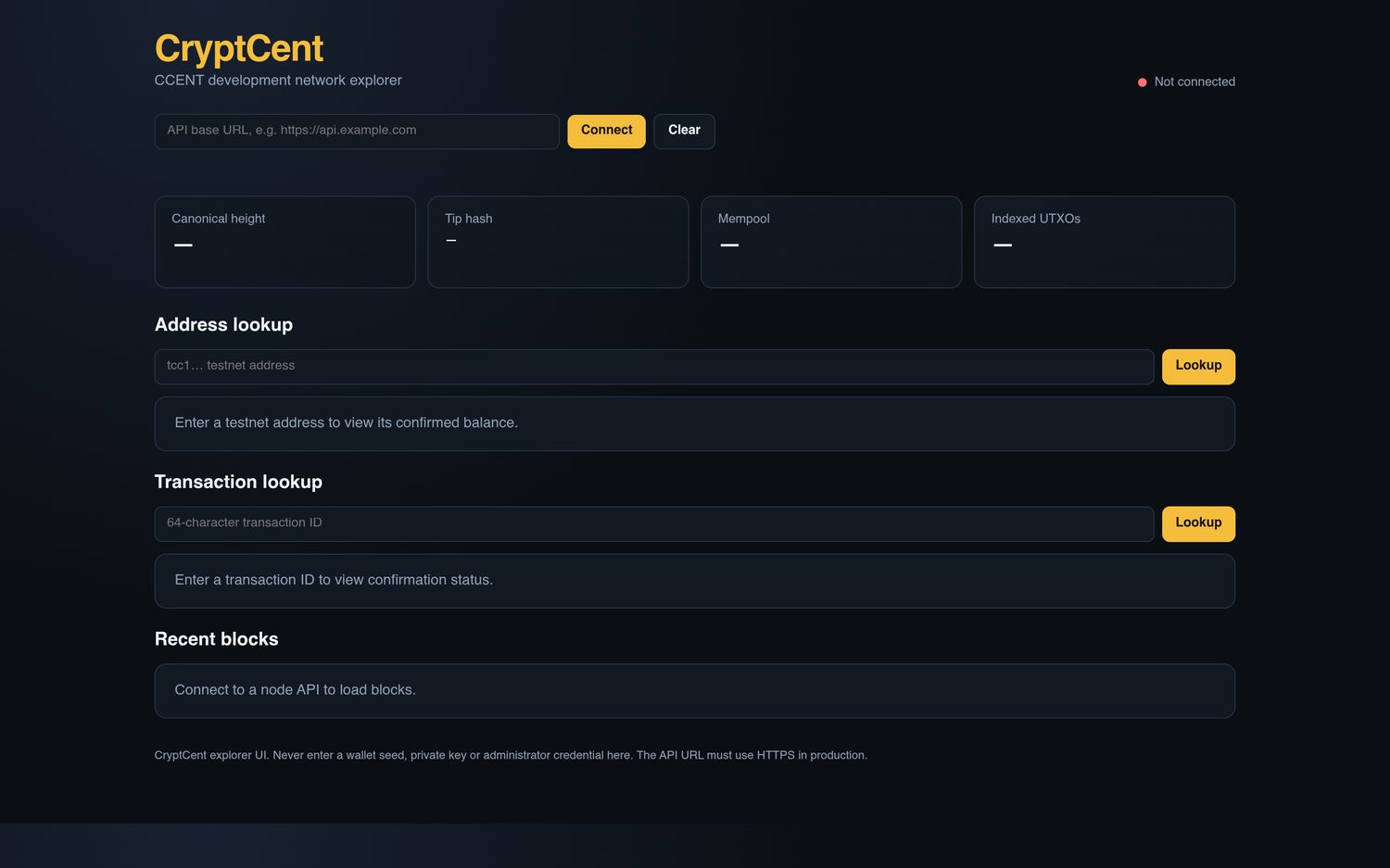
Not a token on somebody else's network. CryptCent is its own Bitcoin-like project with its own consensus, serialization, peer protocol, wallet, miner and explorer, written in Go. UTXO transactions, secp256k1 signatures, chainwork branch selection with durable reorganisation, a bounded mempool with fee policy, and a draft fixed supply of thirty million CCENT.

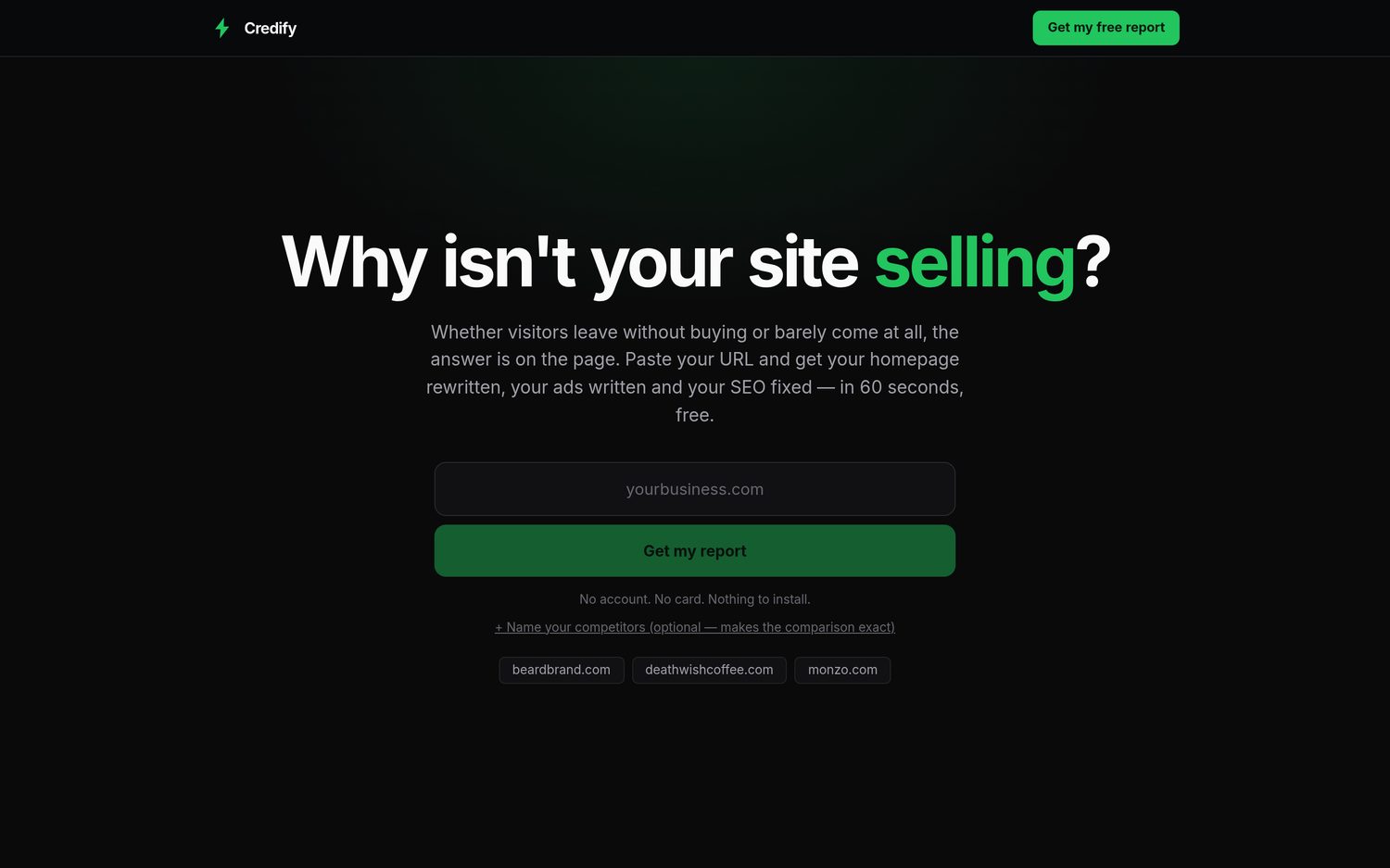
A website audited and rewritten in sixty seconds.
Paste a URL. An eight-stage pipeline crawls the site, pulls nine facts each with a verbatim quote, audits speed, security and SEO, finds competitors, then writes new copy — and a second model pass attacks the first. Nothing is invented: any line asserting a price, guarantee, credential or scale the site doesn't support is deleted before anyone sees it.

Not a course platform. An institution.
A credible public institution joined to a secure operating platform for members, affiliates, trainers, market executors and administrators. Admissions with a real application workflow, a four-stage academic architecture, a technical trade desk with server-computed risk, signed PDF certificates backed by a public verification registry, auditable affiliate commissions and verified Paystack billing.
Twenty-seven vulnerabilities, each with its own cure.
A complete, self-contained security lab that runs on a locked-down laptop with no installs. Twenty-one guided exercises, eleven written lessons, a pcap dataset and a real incident log to analyse. Every vulnerability class ships with its fix in the same file and an A/B harness that proves the exploit works against the naive path and fails against the hardened one.
One brand. Two complete websites.
An editorial long-scroll flagship and a tabbed studio card, sharing one identity, one theme engine and zero build steps. Twenty-eight projects with category filters, a forty-piece lightbox, a journal of studio essays, a generated PDF profile — and a live estimator that reads a plain-English brief, prices the scope in dollars and naira, and pre-fills the contact form before anyone picks up the phone.

This is Conduit's reader, running in your browser. Paste an invoice or pick a sample, and watch it decide whether the row is safe to write — and tell you why when it isn't.
Brand, interface, backend, infrastructure and the business logic in between. Every product on this page was taken from a blank folder to a live URL by one person.
Systems where a wrong answer costs money: extraction that refuses to guess, generated copy checked against source evidence, memory a user can correct.
Payments and verified webhooks, roles and permissions, signed credentials, affiliate ledgers, audit trails — the parts that have to be right the first time.
Consensus, durable state, recovery after failure, bounded decoders, metrics and health endpoints. Written in Go and Python, built to survive a restart.
Design is not a layer added at the end. Typography, motion and restraint are part of whether a product feels credible enough to pay for.
Documented environments, runbooks, pinned dependencies and a deployment someone else can run. You should never be locked to the person who built it.
Send the problem in a paragraph — the system, the volume, the deadline. You'll get back a written scope, a timeline and a price. If it isn't a good fit I'll say so, and tell you what I'd look for instead.